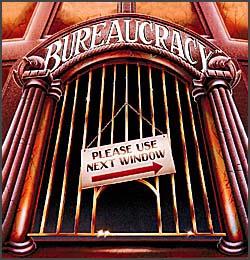
If you’re going to get sick in America today, there’s someone you need to have on your treatment team, besides the doctors, nurses, laboratory technicians and all the rest. You need an accountant.
A good lawyer wouldn’t hurt, either.
So unnecessarily complex – and yes,
so corrupt – has our health-care financing system become, that it is beyond the capability of an ordinary person of common sense and intelligence to cope with. Not only that, but the people who are being asked to pick their way through this diabolical labyrinth – on their hands and knees, as it were – are
sick. They have better things to worry about than whether or not treatments have been properly coded or co-payments correctly calculated.
Let me share just one example. It comes not from my own cancer treatment, but rather from medical treatment being received by our 16-year-old daughter, Ania.
Last May, Ania was hit by a car as she was crossing the street at an intersection. She was knocked to the pavement, and lost three teeth. The police report indicates that the accident was 100% the driver’s fault. In any sane world, you would think the driver’s auto insurance would cover 100% of the damages, no questions asked – right? But no. This is New Jersey, home of the nation’s most dysfunctional auto-insurance system, located in the United States, home of the world’s most dysfunctional medical-insurance system.
There are supposed to be not one, not two, but
three insurance companies lined up to pay for dental implants, to restore Ania’s teeth to the condition they were in before the accident. They are, in order: (1) our auto insurance, (2) our medical insurance, and (3) the auto insurance of the driver who hit her. (Don’t even bother to ask why our auto insurance is the primary payer, when none of our cars was involved in the accident, and Ania – who’s not a licensed driver – was a
pedestrian, but that’s what New Jersey law says.) So far, our auto insurance, State Farm, has paid just under $900, an amount equivalent to about one-third of the cost of the oral surgeon’s bill for the first of three stages of Ania’s treatment. That’s all they say they’re going to pay, based on their “usual, customary and reasonable” assessment.

OK, one insurance company down, two to go. Next comes our medical insurance, Highmark Blue Cross/Blue Shield, the contractor that serves the Presbyterian Church (U.S.A.) Board of Pensions. Note that this is not Horizon Blue Cross/Blue Shield, the local Blue Cross/Blue Shield affiliate here in New Jersey. All Presbyterian ministers, throughout the country, are covered through the Blue Cross/Blue Shield affiliate in Western Pennsylvania. (This detail will be important in a moment.)
Sometime this past fall, after receiving State Farm’s payment, the oral surgeon’s office submitted a claim for the remaining amount to Highmark Blue Cross/Blue Shield – only they didn’t submit it directly to Highmark’s office in Pittsburgh. For some inscrutable reason, known only to the Blue Cross/Blue Shield bureaucrats, claims must be submitted first through the local affiliate. The doctor’s office has submitted the claim multiple times to Horizon Blue Cross/Blue Shield (the New Jersey affiliate), but has heard back absolutely nothing. Each time the claim is submitted, it seems to fall into some kind of administrative black hole. There has been speculation about an error by the doctor’s office in submitting my Blue Cross/Blue Shield member ID number, and also talk of Blue Cross/Blue Shield handling dental claims through some sort of mysterious, special unit. Whatever has happened, Highmark Blue Cross/Blue Shield in Pittsburgh says they have never received any claim in this case, and can’t do anything about paying the doctor until they do.

Meanwhile, the doctor has gotten tired of waiting, and has turned our account over to a collection agency. His receptionist/secretary – the same person who does not apparently have sufficient know-how to navigate the Blue Cross/Blue Shield claims system – tells us she will not schedule an appointment for the next stage of Ania’s treatment until the doctor is paid.
The first collection-agency notice arrived while I was not feeling well, and ended up in a pile of unopened mail. I did not respond to it at the time, as I should have. In response to a subsequent notice, I sent a “dispute letter,” following instructions provided by the collection agency – only to receive a reply saying that I can’t submit a dispute letter after all, because more than thirty days have elapsed since the first notice.
(Then why did they tell me I could? But why ask “why”?) Complicating the whole matter is the fact that the collection agency is claiming we owe the
entire cost of the treatment. Their figure does not reflect the payment made by State Farm (our auto insurance) – which the doctor’s office acknowledges was paid more than six months ago.
I have been on the phone, in recent weeks, with Mindy, a special representative of the Presbyterian Church Board of Pensions, who has been trying very hard to resolve this. I feel like Mindy is the only reasonable person in this strange, Kafkaesque medical-insurance world. Indeed, she has tried very hard to make sense of an essentially nonsensical system. She has hooked me up, in three-way conference calls, with people at Highmark Blue Cross/Blue Shield and with the secretary in the doctor’s office. She has assured all parties concerned that the church wants Highmark to pay this bill, and wants everything possible done to expedite it. Highmark has given verbal assurances that they
will pay it, as soon as they receive a claim. Yet the days drag on, and that claim seems to have vanished into the Horizon Blue Cross/Blue Shield system, accompanied by a loud, sucking sound. In two months, it will be a year since Ania’s accident, and she’s only one-third of the way along to getting her teeth fixed.
I’ve never met Mindy – she’s just a voice over the telephone to me – but I can somehow picture her standing across a flood-swollen river from us, holding up a wad of greenbacks and saying, “Don’t worry, here it is, we’re going to pay this bill.” But there is no footbridge across that raging river, and no boats.
So near, and yet so far...
All this, of course, has nothing to do with my own bills for cancer treatment. With all the different doctors, hospitals and labs involved in my treatment, I’ve accumulated an unbelievably huge pile of envelopes. Some of these contain bills: the system requires that nothing be done about these until the insurance has paid, so that means there end up being duplicate and triplicate copies of each one. There are also explanation-of-benefits statements (EOBs) from Highmark Blue Cross/Blue Shield, which must be cross-checked against the medical bills for accuracy. I’ve purchased special medical bill-tracking software to try to keep it all straight – it’s the only strategy that makes sense, really – but am months behind in doing the data-entry required. I work on it in fits and starts, when I’m feeling up to it.
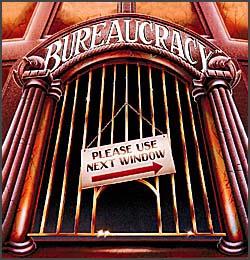
What does an elderly or infirm person do, I wonder, with a mailbox full of such paperwork, with its baffling explanations and arcane codes? Probably nothing. Such a person may never be able to reconcile the various, competing financial statements – and therefore may never correct errors that may be hiding in them. The human cost of coping with this vast, unfeeling bureaucracy – a cost inflicted, in many cases, on patients too sick to bear it – is the dark and shameful underside of our health-care system.

That’s what I mean when I say every patient’s treatment team ought to include an accountant.


 Today I am feeling well enough to lead worship, but I don't have to, because our church's Presbyterian Women group is conducting the services. This is something we scheduled many months ago, before I even got sick. The group wanted a special women's emphasis for a Sunday in the spring, and this is the date we came up with.
 This morning they divide the sermon into six segments. In each segment, one of the costumed women reads a scripture passage about her character, then presents a brief, first-person monologue describing who she was, as a woman of faith. Then, it being the first Sunday of the month, we move into the sacrament of the Lord’s Supper, with two women ministers – Robin and Claire – presiding. Except for Bill, our choir director, and some of the choir members, the worship leadership today is 100% female.
 There's a common misconception that, when Martin Luther coined that phrase, he was saying something like "all church members are ministers." In fact, he has a narrower meaning. He's speaking, in particular, about the practice of absolution – the spoken declaration, following a confession of sin, that the person making the confession is forgiven. In Luther's time – and in the Roman Catholic church, even today – only a priest has the authority to make that declaration. Through tight control of the power of absolution (which, in the worst cases, corrupt church officials marketed for cash, through the sale of indulgences), the church was able to insure the loyalty even of kings. In one memorable scene in 1077, the excommunicated Holy Roman Emperor Henry IV journeyed as a pilgrim all the way to Italy, to kneel in the snow outside the papal retreat at Canossa, to beg Pope Gregory VII's declaration of absolution for his sins.