Saturday, March 4, 2006

March 4, 2006 - Seasons

For the past several days, I’ve been laid low with chemotherapy side effects. Nausea, exhaustion, bone pain – I’ve had them all. It’s entirely predictable, but not much easier for having known the side effects were coming.

It occurs to me that I’m living through a whole season of illness. Eighteen weeks of chemotherapy – six treatments, three weeks apart – is about equivalent to an entire season of the year.

The fact that my season of illness coincides with winter seems appropriate. It’s a gray, cold time: a time when I can only hope the arduous treatments are having a positive effect, somewhere deep within. I won’t be able to tell for sure until I have my CT scan in a couple of weeks – and maybe not even then.

In the modern world, the impact of the seasons is mostly blunted by technology. Yet it hasn’t always been that way. In the agricultural economy of generations past, our ancestors had ample experience enduring the long, fallow weeks of winter. This discipline taught them patience. No imported strawberries from the supermarket produce section for them – and no supermarket, either, for that matter. Just last year’s garden produce, floating like scientific specimens in mason jars on the basement shelves, or the root-vegetables moldering in their burlap bags. What meat or fish there may have been was salted or smoked (boiling was the cuisine of choice for that tough fare). As winter advanced, the supplies in the larder grew fewer. There could be weeks of nagging hunger, towards the end of that season of scarcity.


Electricity was, of course, unknown in those days. A kerosene lamp or candles could bravely project an illusion of daytime, allowing an hour or two of squint-eyed reading by the fire, but mostly you just slept through the dark months. When the winter freeze finally ended, and the sun’s warmth returned, there was surely a rejoicing such as we – who grouse about the brief dash from a heated house to a heated car – can scarcely understand.
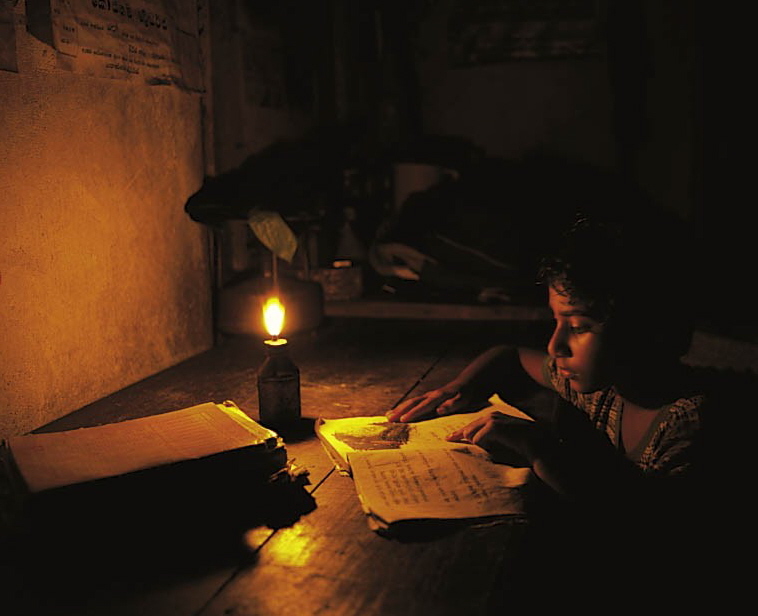

Whenever in the year it may occur, or at whatever latitude the patient may live, chemotherapy is a wintry season. Life becomes gray, cold and featureless. One day seems much the same as the last, so long as the side-effects persist. If thinking of this experience as a season offers any comfort at all, it’s the realization that, in time, one season will pass into the next and the warmth of the sun will return.

In his own long season of suffering, Job dared to question the Lord as to the meaning of what he was going through. The Almighty’s answer may not seem very satisfying on a philosophical level, for it is mainly a challenge to Job’s right to complain at all:

“Where were you when I laid the foundation of the earth?
Tell me, if you have understanding.
Who determined its measurements – surely you know!
Or who stretched the line upon it?
On what were its bases sunk,
or who laid its cornerstone
when the morning stars sang together
and all the heavenly beings shouted for joy?...

Have you commanded the morning since your days began,
and caused the dawn to know its place,
so that it might take hold of the skirts of the earth,
and the wicked be shaken out of it?...

Have you entered the storehouses of the snow,
or have you seen the storehouses of the hail,
which I have reserved for the time of trouble,
for the day of battle and war?”

(Job 38:4-7, 12-13, 22-23)

I have felt what sort of blast comes forth from “the storehouses of the snow.” I have turned my back to the chill wind, and shivered. While I cannot understand why it is my lot to endure this bitter season, I take some comfort in the awareness that, in due time, another season will arrive to take its place.

Thursday, March 2, 2006

March 1, 2006 - Chemo 3


Today is Ash Wednesday, the first day of Lent – although I’ve known all along that I would not be participating in our church’s Ash Wednesday service. We have a tradition here, now several years old, of having a simple, penitential meal of soup and bread in our church hall, followed by the sacrament of the Lord’s Supper. We also offer the imposition of ashes for those who wish to receive this sign – an idea I brought to this church, and which at first seemed strange to our people (“too Catholic,” some thought), but which has really caught on.

The reason I knew I would not be present for the Ash Wednesday service is that today is also – by a quirk of the calendar – the day of my third chemotherapy treatment. At the end of the three-week recovery period following this treatment, I’ll be halfway through my chemo experience.

My trip to Dr. Lerner’s office now seems almost routine (something I could hardly have imagined would be possible on the day of my first treatment). I guess you can get used to anything. Claire drives me in, and sits in the waiting room while I’m ushered back into the Nurses’ Room for the tapping into my porta-cath. I remind them to use a large needle to reach this deeply-implanted device, so there’s no repeat of the uncomfortable trial-and-error process of last time. Diane, the nurse who’s doing this for me, is very skilled, and the pain is no worse than getting a blood draw. It’s brief, and over in an instant. Then, she flushes the porta-cath and draws a blood sample through it for my weekly CBC (complete blood count), before directing me into one of the examining rooms.

Claire joins me there, and we meet with Dr. Lerner. Nothing new here – a cursory physical exam, some questions about how I’m doing, and a review of my charts. He writes a prescription for a CT scan in a couple of weeks – this being my third chemo treatment of six, it’s time for a mid-course check on what’s happening to my abdominal tumors. I ask Dr. Lerner how often these CT scans result in a mid-course change in the treatment protocol, and he says not often – only if “there’s a significant change for the worse,” meaning that the tumors are growing rather than shrinking. The fact that he doesn’t have to make these mid-course corrections very often is reassuring.

It’s back to the treatment area after this. I take my place in the same little room where I was for my last two treatments. I relax in the lounge chair, Vanessa starts me on the anti-nausea drug Aloxi, then brings in another bag filled with Benadryl (which always accompanies the chemo treatments). No sooner does the Benadryl start going than – BAM! – my eyelids start drooping and I fall asleep for two and a half hours. I awake feeling flushed and sweaty from the Rituxan, but not so much this time that I need to ask them to slow it down. Feeling grateful for the unexpected nap, I make the first of many trips down the hall to the rest room, pushing the IV pole-on-wheels ahead of me (several of the chemo drugs are bladder irritants, so this ungainly procession is a familiar part of the routine). As soon as I unplug the IV pump from the electrical socket on the wall, the thing switches to battery power and starts beeping a warning signal, so I feel conspicuous as I walk past the other patients’ treatment rooms, especially after the fourth or fifth trip of the afternoon. Oh well, we’re all this together.

It’s all over by about 4:30 – six hours this time, a record. Claire has arrived a few minutes earlier, so we drive home. I sit on the couch and eat a little supper (again provided by one of our church members - Yay!), despite the queasy feelings I’m beginning to experience. We can hear the comings and goings of people next door in the church’s Education Annex, as the Ash Wednesday soup supper and service is beginning.

It feels odd not to be there. Claire has some ashes left over from her hospice chaplain work today, so we mark each other’s foreheads with them. Somehow, it’s hard to utter the traditional words, “Remember that you are dust, and to dust you shall return,” so we just let the ashes speak for themselves. Neither of us needs much reminding of our mortality after a day of chemotherapy, but the ritual is comforting, all the same.